

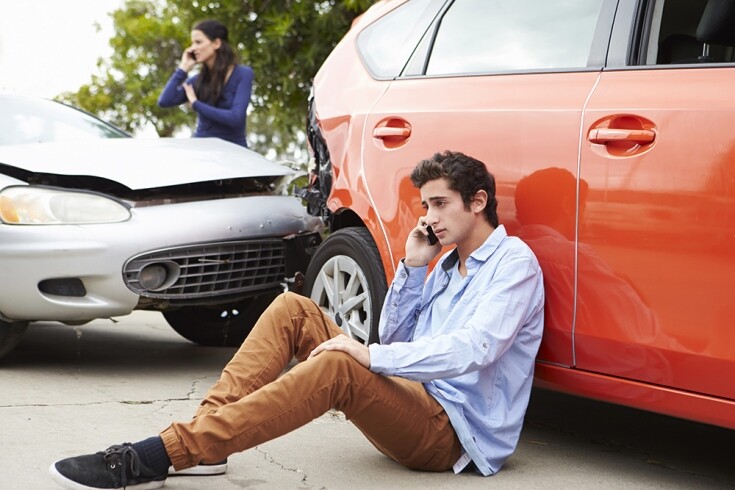
If you were hurt in a Houston car accident caused by a driver who had no applicable liability insurance, do not assume you have no options. Your own auto policy may include uninsured-motorist coverage, and other policy terms may matter too.
If the other driver has some insurance but not enough to cover the injury claim, underinsured-motorist coverage may also be relevant. The answer can depend on the policy, the crash facts, fault, notice, and the records showing your injuries and losses.
If you were physically hurt and need help understanding what may apply, learn more about a Houston uninsured and underinsured motorist lawyer.
This guide explains what uninsured and underinsured mean, what to do after the crash, what records to keep, and when it may be time to ask for help.
This is general information. Coverage and claim questions depend on the actual policy and the facts of the accident.
What is the difference between uninsured, underinsured, and hit-and-run crashes?
These terms sound similar, but they describe different situations.
Uninsured driver
The other driver is identified, but does not have applicable liability insurance.
Underinsured driver
The other driver has insurance, but the available coverage may not be enough to cover the injury claim.
Hit-and-run
The driver leaves the scene or cannot be identified. A hit-and-run can raise separate proof and coverage questions.
For a separate hit-and-run matter, see a Houston hit-and-run accident lawyer.
These labels help describe the situation, but they do not decide what happens next. The facts, records, and policy language still matter.
What should you do right after a crash with an uninsured driver?
Start with safety and medical care.
- Move to safety and call 911 if emergency help is needed.
- Get medical attention if you have pain, dizziness, a head injury, neck or back symptoms, or any other sign that you were physically hurt.
- If it is safe, get the other driver’s name, contact information, plate number, and vehicle details.
- Photograph the vehicles, the scene, the road, your injuries, and other identifying details when it is safe to do so.
- Get witness names and contact information if possible.
- Ask how to obtain the crash report and write down the report number if one is available.
- Notify the appropriate insurer promptly and follow the policy’s instructions. Keep a record of the notice and any response.
- Save every bill, record, email, text, and call note tied to the crash.
Do not chase another driver, go back into danger, or try to investigate private information on your own.
For a broader first-day checklist, see what to do in the first 24 hours after a car accident.
What insurance coverage might apply after an uninsured-driver crash?
The answer depends on the actual policy and the facts of the crash. These are some of the coverage questions that may matter.
Uninsured-motorist bodily-injury coverage
Your own policy may include uninsured-motorist coverage that becomes relevant when the driver who caused the crash has no applicable liability insurance. The policy’s definitions, limits, exclusions, proof requirements, and other conditions control.
Underinsured-motorist coverage
If the other driver has insurance but the available limits may not cover the injury claim, underinsured-motorist coverage may become relevant. Whether it applies depends on the policy and the facts.
Medical-payments or similar policy coverage
Some policies may include medical-payments, personal-injury-protection, or other coverage that could help with medical bills or treatment costs. Do not assume every policy includes every type of coverage or pays the same way.
Property-damage coverage
Damage to the vehicle is a separate issue from bodily injury. This article focuses on crashes in which someone was physically hurt.
A Houston uninsured and underinsured motorist lawyer can review the policy and crash facts with you.
How do you find out whether the other driver was uninsured?
Do not assume the driver was uninsured based only on a verbal statement, an expired insurance card, or confusion at the scene.
Instead:
- Save the insurance information exchanged at the scene.
- Keep the crash report and follow-up messages from insurers.
- Write down what the other driver, responding officer, or insurance company said about coverage.
- Ask your own insurer what information it needs to review the claim.
- Keep every record tied to the coverage question.
If the answer is still unclear, an attorney can help review the available facts and policy documents.
What evidence helps support an uninsured-driver injury claim?
Clear records can help an attorney evaluate what happened and how the crash affected you. Sort the evidence into four groups.
Crash evidence
Keep the crash report, photos of the scene and vehicle damage, witness information, towing records, and any video that may exist.
Coverage evidence
Keep the full auto policy if you have it, the declarations page, any uninsured- or underinsured-motorist documents, and all letters, emails, and claim numbers tied to the coverage question.
Injury and treatment evidence
Keep hospital records, doctor records, imaging and therapy records, prescriptions, medical bills, receipts, treatment instructions, and a truthful, dated record of symptoms.
Loss and daily-life evidence
Keep missed-work records, wage information where applicable, work restrictions, and notes showing how the injury changed your transportation or daily routine.
Saving evidence does not guarantee a result. It can make it easier to evaluate what happened and what losses may be connected to the crash.
What if your own insurance company disputes the claim?
The disagreement may involve:
- Whether the other driver was uninsured or underinsured
- Whether your policy applies to the crash
- Whether policy conditions or notice issues matter
- Whether the crash caused the injuries being claimed
- Whether fault is disputed or shared
- Whether the records support the treatment and losses
Keep every message, document, and call note. Do not guess, and do not sign a release or other document without understanding it.
If the insurer asks for a detailed statement, see talk to the insurance adjuster after a Houston car accident.
What if the other driver says you were partly at fault?
That does not automatically end the claim. The details still matter, including where the crash happened, what witnesses saw, the vehicle damage, the crash report, and any other available evidence.
An insurance company’s position about fault is not automatically the final answer. If blame is being pushed back onto you, the facts may need a closer review.
For more on that question, see Can You Still Recover Compensation If You Were Partly at Fault in a Texas Car Accident?.
Should you accept money or sign a release after an uninsured-driver crash?
Try not to rush.
Before accepting money or signing a release, think about whether you understand:
- How badly you are hurt
- Whether more treatment may be needed
- How much the bills may ultimately be
- What the document is intended to resolve
Save the check, release, letter, email, and other documents tied to the offer. Do not assume the title of a document tells you everything it means.
If you were hurt by an uninsured or underinsured driver and need help understanding what to do next, schedule a FREE Case Review.
When should you talk to a Houston uninsured-motorist lawyer?
It may be time to ask for help if:
- You were physically injured
- The other driver has no insurance or very low limits
- You are not sure what your own policy covers
- The insurer is disputing fault, coverage, notice, or treatment
- You are being asked for a recorded statement, release, or quick settlement
- Medical bills, lost work, or ongoing treatment are part of the problem
- The crash involved several vehicles, a pedestrian, a cyclist, or another added complication
If you were hurt by an uninsured or underinsured driver in Houston and want help understanding the next step, schedule a FREE Case Review with Herbert Trial Law.
Frequently Asked Questions
What should I do if the driver who hit me has no insurance?
Get medical care if you are hurt, save the evidence, keep your records, and be careful before making assumptions about what coverage may apply.
Can I recover compensation if the other driver is uninsured?
You may still have options, but the answer depends on the policy, the facts, and the available evidence.
What is uninsured-motorist coverage in Texas?
It is coverage that may apply when the driver who caused the crash does not have applicable liability insurance. The actual policy controls.
What is the difference between uninsured and underinsured motorist coverage?
Uninsured usually means the driver had no applicable insurance. Underinsured usually means the driver had some insurance, but it may not be enough for the injury claim.
Does my own insurance pay if the at-fault driver has no insurance?
It may, depending on your policy and the facts of the crash.
What if I do not know whether the other driver had insurance?
Keep the exchanged information, the crash report, and the insurer’s messages. Do not jump to a conclusion before the available records are reviewed.
Should I give my insurer a recorded statement after an uninsured-driver crash?
That can depend on the request, the policy, and the facts. Do not treat it as an automatic yes-or-no question.
What if I was partly at fault?
That does not automatically end the claim, but it makes the facts and evidence more important.
What if the crash was a hit-and-run?
That is a related but separate situation. It may involve additional proof and coverage questions.
What documents should I bring to a free case review?
Bring the crash report, photos, medical bills, treatment records, insurance letters or emails, claim numbers, and any offer or release papers you received.
If you were physically hurt by an uninsured or underinsured driver in Houston and want help sorting through the next step, request a free case review.
This article provides general information. The facts, policies, and legal issues in each accident can be different.
