

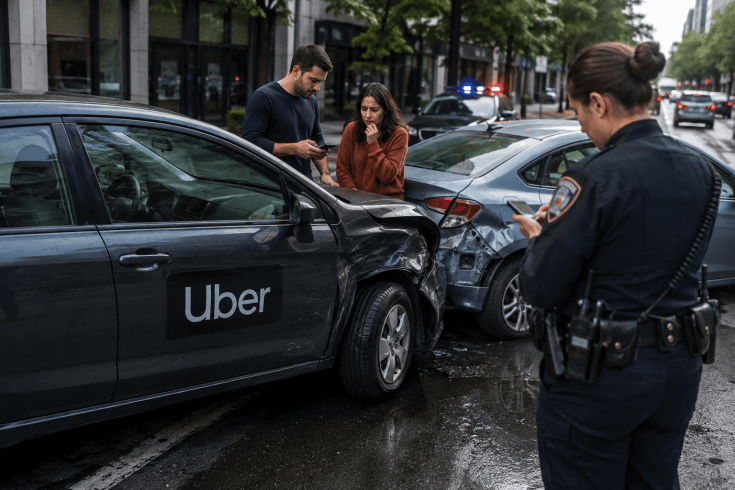
If you were hurt in an Uber or Lyft accident in Houston, one of the first questions is also one of the most confusing: who is actually responsible?
That confusion is not an accident. Rideshare cases often involve overlapping insurance policies, changing coverage rules, and facts that depend heavily on what the driver was doing in the app at the time of the crash.
A normal car accident claim is already stressful. A rideshare claim adds another layer because the answer can change depending on whether the driver was off duty, waiting for a ride request, on the way to a pickup, or actively carrying a passenger.
At Herbert Trial Law, we help people cut through that confusion so the insurance company cannot use it to pay less than the claim deserves.
Why rideshare accident claims are different from other car accident cases
An Uber or Lyft accident claim can be more complicated than a typical car accident case because multiple insurance policies may apply. The available coverage, the path of the claim, and who tries to shift responsibility can all depend on what the rideshare driver was doing at the time of the crash.
In a regular accident, the focus is usually on the drivers and their insurance coverage. In a rideshare accident, you may also need to determine whether the rideshare company’s coverage applied at that exact moment.
That means the key issue is not just who caused the crash. It is also what coverage was active when it happened.
This is why people hurt in rideshare accidents often get conflicting answers early. One insurer may point to another. One side may say the app status matters. Another may push a narrow version of the facts before the full picture is clear.
Does it matter whether the Uber or Lyft app was on?
Yes. In many rideshare claims, app status matters a lot.
The coverage picture may be different depending on whether the driver:
- had the app off
- had the app on but had not accepted a ride
- had accepted a ride and was on the way to pick someone up
- was actively transporting a passenger
Those stages can affect which policy may apply and how much coverage may be available.
That is one reason these cases should not be reduced to a simple “the driver had insurance” answer. In a rideshare crash, the details matter.
Which insurance policy may apply after a rideshare crash?
The answer depends on the facts.
In some cases, the driver’s personal insurance may be part of the picture. In others, rideshare-related coverage may also apply. In still others, another driver’s policy may be central if that driver caused the collision.
This is where people often get stuck. The claim starts moving before they fully understand which policy is being presented as primary, what limitations may exist, and whether the injury claim is being evaluated through the right lens.
The insurance company’s version of “available coverage” is not always the same thing as a full analysis of what may actually apply. Herbert Trial Law helps people look deeper, reviewing the rideshare driver’s status, the policies in play, and the facts of the crash so the claim is not limited by the first insurer-friendly explanation.
What if another driver caused the collision?
That does not automatically make the rideshare angle irrelevant.
If another driver caused the crash, their insurance may be a major part of the claim. But depending on the facts, the rideshare context can still matter when it comes to available coverage, passenger injuries, and how the case is documented.
This is especially important when multiple insurers start looking at the same event from different angles.
The more parties involved, the easier it becomes for the claim to get narrowed, delayed, or pushed around between carriers unless someone, like Herbert Trial Law, is looking carefully at the whole picture.
What evidence should you save after an Uber or Lyft accident?
In a rideshare accident case, small details can become important later.
If you are able to do so safely, helpful evidence can include:
- screenshots from the Uber or Lyft app
- trip or ride details
- driver information
- vehicle information
- photos of the scene and damage
- names of witnesses
- medical records showing the injuries and treatment timeline
If you were a passenger, the trip confirmation and timing may be especially useful. If you were another driver or a pedestrian, anything that helps establish the rideshare driver’s status at the time of the crash can matter.
Why do rideshare claims become confusing so quickly?
Because confusion benefits the side trying to control the payout.
When the claim involves multiple insurers, changing app status, and a person who is still trying to recover, it becomes easier for the real issue to get lost. The conversation shifts from the full impact of the injury to the technical fog around coverage.
That fog can make a person feel stuck, even when the injury is serious and the case deserves a cleaner review.
This is one reason Herbert’s insider position matters here. Kyle Herbert used to work on the insurance-defense side, which helps him see how rideshare claims can be narrowed, redirected, or oversimplified before the full facts are understood. You do not need a louder explanation. You need a clearer one.
When should you get legal help for a rideshare injury claim?
You should consider getting help when:
- you were hurt as an Uber or Lyft passenger
- the rideshare driver may have caused the crash
- another driver caused the crash but the rideshare context complicates the claim
- insurers are pointing in different directions
- you are still treating and do not know whether the offer is fair
- the claim feels more confusing than it should
You do not need to wait until the frustration gets worse. In many rideshare cases, the right time to review the claim is before the confusion becomes part of the official story.
How Herbert Trial Law approaches rideshare accident claims
At Herbert Trial Law, we start by asking the right questions.
What was the driver doing in the app? Which insurance layers may apply? What does the injury picture really look like? Is the claim being framed around the full truth, or around the version that is easiest to close?
Herbert Trial Law approaches rideshare accident claims in a simple, practical way:
- Start with a Free Offer Reality Check or case review.
- Decode the insurance company’s playbook.
- Give you an honest answer about whether to settle the claim or fight for more.
Rideshare crashes create confusion fast. Our job is to slow that confusion down and make the claim easier to understand.
You do not have to sort out the rideshare coverage maze alone
If you were hurt in an Uber or Lyft accident in Houston, do not assume the first claim offer or coverage explanation you receive reflects the full value of your case.
Insurance companies know how to pay you less. We know how to make them pay more.
Schedule a FREE Case Review and get a clear understanding of who may be responsible and what your injury claim really involves.
Frequently Asked Questions
Who pays if I was a passenger in an Uber or Lyft accident?
It depends on the facts of the crash and what coverage applied at the time, including whether the rideshare driver was actively using the app for a trip.
Does it matter if the driver had accepted a ride already?
Yes. In many cases, the driver’s app status can affect which insurance coverage may be available.
What if another driver caused the crash instead of the Uber or Lyft driver?
That driver’s insurance may still be central, but the rideshare context can still affect how the claim is reviewed and documented.
Should I save screenshots from the rideshare app?
Yes. Trip details, ride confirmations, and timing can all help clarify what was happening when the crash occurred.
What if the insurance company already made an offer?
Before accepting any offer, it helps to understand whether the full coverage and injury picture has actually been reviewed.
