

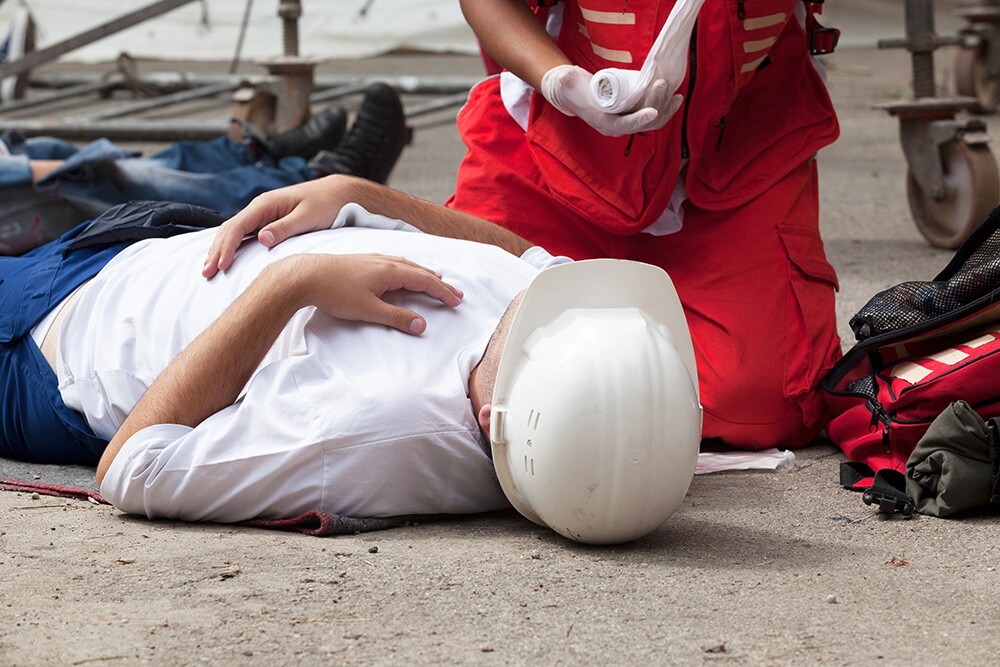
If you were hurt on a construction site in Texas, one of the biggest questions is whether the case is only a workers’ compensation issue or whether it may also be a personal injury claim.
That distinction matters because a construction accident can involve more than one company, more than one layer of responsibility, and more than one path to recovery.
Many injured workers are told a narrow version of the case early. File the workers’ comp claim. Talk to the company. Let the process play out. But on a construction site, the full picture is not always that simple.
At Herbert Trial Law, we help injured parties gain clarity on a case by looking at who was involved, what caused the injury, and whether another party may be responsible beyond the employer relationship alone.
What is the difference between workers’ comp and a personal injury case?
Workers’ compensation and personal injury claims are not the same thing.
In general, workers’ comp is tied to workplace injury benefits. A personal injury case focuses on whether another party’s negligence caused the harm and whether that party should answer for the damage that followed.
On a construction site, both concepts can matter because the work environment often includes:
- general contractors
- subcontractors
- equipment providers
- property owners
- outside drivers
- vendors or maintenance parties
That means the injury may involve more than just the direct employment relationship. It may also involve other companies, contractors, property owners, or equipment-related parties connected to what happened.
When can a construction injury involve a third-party claim?
A construction injury may involve a personal injury case when someone other than your direct employer was involved in causing what happened.
That can include situations involving:
- unsafe site conditions created by another contractor
- defective or badly maintained equipment
- vehicle collisions on or near the site
- falling objects or unsafe work zones caused by another company
- property hazards controlled by an owner or separate entity
The exact path depends on the facts. But the important point is this: a construction injury is not always limited to one lane just because it happened at work.
Who may be responsible on a construction site?
Responsibility on a construction site can be spread across multiple parties.
Depending on the case, that may include:
- an employer
- a general contractor
- a subcontractor
- a site manager
- an equipment company
- a maintenance provider
- a driver or transportation company
- a property owner
This is one reason construction injuries require a careful review. If the claim is framed too narrowly at the start, the real source – or sources – of responsibility may never be fully examined.
What evidence matters after a construction accident?
Construction injury cases often depend on records and facts that go beyond a basic incident summary.
Helpful evidence may include:
- photos and videos from the scene
- the condition of equipment, scaffolding, ladders, or materials
- witness statements
- incident and safety reports
- site logs
- contractor relationships
- medical records showing the injury and treatment course
On a construction site, the physical evidence and the paperwork can both matter. So can the chain of responsibility between the companies working there.
Employers and insurers often push a narrow version of the case because it is easier to manage
If the claim is treated as a simple workplace injury with no deeper review, fewer questions get asked. Fewer parties get examined. Fewer failures get traced back through the site.
That does not mean every construction accident becomes a major third-party lawsuit. It does mean the person hurt on the site should not assume the first explanation is the full explanation.
The insurance company’s playbook often depends on speed, simplification, and early framing. Herbert’s job is to slow that down and look deeper.
What if I already started a workers’ comp claim?
That does not necessarily mean other legal questions disappear.
A workers’ comp process and a third-party injury review can involve different issues. One path does not automatically answer the other.
That is why it helps to understand how the site was operating, which companies were involved, and what actually caused the injury before assuming there is only one route available.
When should you ask a lawyer to review a construction injury?
You should consider a review when:
- the injury is serious
- multiple companies were working on the site
- equipment or site safety may have played a role
- a vehicle or outside contractor was involved
- the explanation you are getting feels incomplete
- you are unsure whether another party may be responsible
Construction cases are often more layered than they first appear. A serious review can help reveal whether the injury belongs in more than one legal lane.
How Herbert Trial Law approaches construction injury cases
At Herbert Trial Law, we do not assume the first version of the case is the only version.
We ask who controlled the site, who created the hazard, what equipment or conditions were involved, and whether another company’s negligence may have contributed to the injury.
Herbert Trial Law approaches these cases in a simple, practical way:
- Start with a Free Offer Reality Check or case review.
- Decode the insurance company’s playbook.
- Help you decide whether the injury is being handled fairly or whether the case needs a broader investigation.
That matters because a construction injury claim can be limited early by the wrong assumptions. The sooner the full picture is understood, the harder it is for key facts to get buried.
A construction injury may involve more than one legal path
If you were hurt on a construction site in Texas, do not assume the case is automatically limited to one narrow process.
Insurance companies know how to pay you less. We know how to make them pay more.
Schedule a FREE Case Review and get a clearer look at whether your construction injury may involve a personal injury claim beyond the basic workplace process.
Frequently Asked Questions
Is every construction injury case just workers’ comp?
No. Some construction injuries may also involve a personal injury claim if another party helped cause the accident.
What is a third-party construction injury claim?
It is a claim against someone other than your direct employer, such as another contractor, equipment provider, property owner, or outside driver.
What if multiple companies were on the site?
That is one reason a deeper review matters. Multiple companies can mean multiple layers of responsibility.
Can defective equipment turn a construction injury into a personal injury case?
It can, depending on the facts and who was responsible for the equipment, maintenance, or site safety.
Should I wait until the workers’ comp process finishes before asking questions?
Not necessarily. Early review can help identify whether the injury may involve more than one legal path before the case gets framed too narrowly.
