

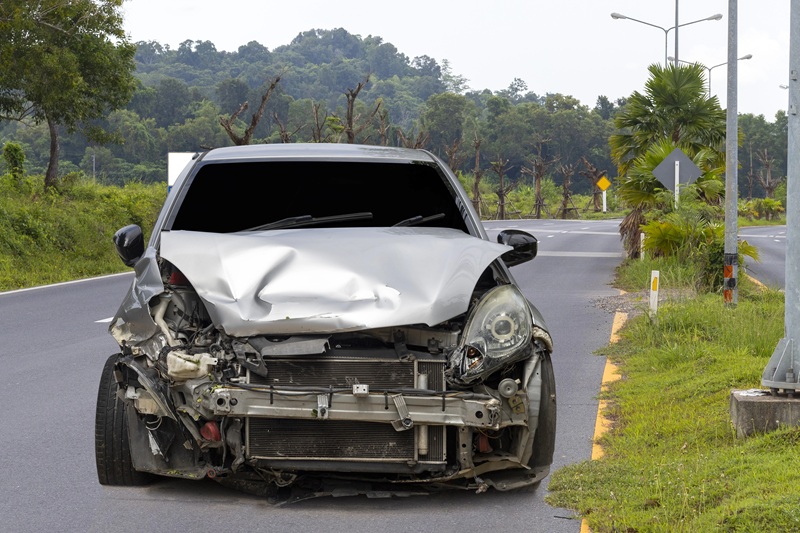
You did what you were supposed to do.
You watched the light. You followed traffic. Maybe you were just trying to get home after work or pick up your kids.
Then out of nowhere:
- A car blows through an intersection.
- A truck sideswipes you changing lanes.
- A driver clips you in a crosswalk.
You’re hurt. Your vehicle is damaged. And before you can even process what happened, the other driver is gone.
Now you’re left with a brutal question:
“If the driver ran, do I even have a case—or am I just stuck with the bills?”
Insurance companies know exactly how to use that doubt against you. They quietly lean on the idea that a hit-and-run is “just bad luck” and suggest there may not be much they can do.
At Herbert Trial Law, founding attorney Kyle Herbert used to defend insurance companies in serious injury cases—including claims where the at-fault driver was never identified. He’s seen from the inside how adjusters treat hit-and-run victims, how they devalue claims, and when they finally start taking a case seriously.
Today, we use that insider knowledge to help people in Houston understand what’s really possible after a hit-and-run—and how a hit and run accident lawyer at Herbert Trial Law can still build a strong claim even when the other driver disappears.
This guide walks you through:
- Why hit-and-run cases are different from “normal” wrecks
- What your own insurance company isn’t telling you
- How we investigate when the driver is gone
- Ways to recover compensation through uninsured motorist coverage and other options
- What to do in the first few days after the crash
So you can make a truth-first decision about your next step.
Why Hit-and-Run Crashes Feel Hopeless (and How Herbert Trial Law Changes That)
In a typical wreck, there’s another driver, another insurance policy, and a clear place to start.
With a hit-and-run, people often assume:
- “No driver, no case.”
- “My insurer will treat me fairly because I’m their customer.”
- “If the police don’t find the driver quickly, it’s over.”
But a seasoned Houston hit and run accident lawyer at Herbert Trial Law looks at it very differently.
From the legal and insurance side, hit-and-run crashes are often uninsured motorist (UM) cases. That means:
- You may actually be making a claim against your own insurance policy.
- Your insurance company is suddenly acting like the defense—not just your helper.
- The question isn’t just “Who hit me?” It’s “What coverage exists, and how do we prove the harm?”
That’s where insider knowledge matters. Because we know the insurance company’s playbook, we can anticipate how they will:
- Question your version of what happened
- Downplay your injuries
- Argue that your coverage doesn’t apply
- Push you toward a low settlement because “these cases are hard to win”
Our job at Herbert Trial Law is to flip that script.
Insurance companies know how to pay you less. We know how to make them pay more.
What Insurance Won’t Tell You About Hit-and-Run Claims (and What We Will)
After a hit-and-run, you may hear a lot of polite phrases from adjusters:
- “We’re sorry this happened.”
- “We’ll see what we can do under your policy.”
- “We just need some information to move forward.”
Here’s what they usually don’t spell out clearly.
1. Your Own Coverage Might Be the Key—But They Won’t Walk You Through It
Most people don’t remember every line of their auto policy. Adjusters know that.
Depending on your policy, you may have:
- Uninsured/Underinsured Motorist (UM/UIM) coverage
- Personal Injury Protection (PIP)
- Medical payments coverage
At Herbert Trial Law, we review your policy to:
- Confirm whether a hit-and-run is treated as an “uninsured motorist” event
- Identify every coverage bucket that might apply
- Push back if the insurer tries to say certain benefits don’t apply
Instead of guessing what might be covered, we decode the policy and show you what’s actually on the table.
2. Your Own Insurer Can Fight You Like the Other Side
Once you make a UM claim, your insurance company has a financial reason to minimize what they pay. From the inside, Kyle has seen insurers:
- Question whether the hit-and-run really happened as reported
- Argue that your injuries were “pre-existing” or minor
- Use gaps in medical treatment to discount your claim
Because we know this playbook, we prepare your case to answer those attacks before they start. We help you:
- Document the crash clearly
- Keep a consistent medical record
- Avoid common traps in recorded statements
A Houston personal injury lawyer at Herbert Trial Law understands that even “your” insurance company treats these claims like a defense case—and we build your file accordingly.
3. Evidence Still Matters—Even Without the Other Driver
Adjusters may act like a missing driver means “not much can be done.” In reality, hit-and-run cases often turn on the quality of the evidence, not just the identity of the driver.
That’s where a focused investigation from Herbert Trial Law comes in.
How Herbert Trial Law Builds Your Hit-and-Run Case When the Driver Vanishes
A serious hit-and-run isn’t just about tracking down a license plate. It’s about building a case strong enough that your own insurance company has to take your injuries and losses seriously.
Here’s how we typically approach it.
Step 1: Lock In Safety, Medical Care, and Basic Facts
Before anything else, you need to protect your health and create a clear record. We want to see that you:
- Called 911 and reported the hit-and-run so there’s an official crash report
- Got evaluated at the ER or urgent care, even if adrenaline was masking pain
- Followed up with your doctor or specialist and documented all symptoms
Later, we use these records to show that:
- The crash actually happened, when and where you said it did
- Your injuries are consistent with the type of impact you described
- You didn’t “wait too long” to seek care
Step 2: Investigate Like the Defense Team Will—But for You
When Kyle defended insurance companies, he watched defense firms move fast to collect evidence that helped them. Now that insider perspective is used to help you.
At Herbert Trial Law, we may:
- Obtain and analyze the police report, including any officer notes about debris, skid marks, or partial plate information
- Request nearby camera footage from:
- Traffic cameras
- Business security cameras
- Residential doorbell cameras
- Locate and interview witnesses who saw the crash, the fleeing vehicle, or your condition afterward
- Review vehicle damage and photos to understand:
- Direction and force of impact
- Likely speed and type of vehicle
Even if the other driver is never found, this kind of evidence helps prove that:
- A real collision occurred
- You were not at fault
- The impact was serious enough to cause the injuries you’re claiming
Step 3: Trace Every Possible Source of Coverage
In a hit-and-run, we look beyond just “the driver who ran” and ask:
- Does your auto policy have UM/UIM coverage that treats a hit-and-run as an uninsured driver?
- Do you have PIP or MedPay that can help with medical bills regardless of fault?
- Were you in a work vehicle or on the job, opening the door to workers’ compensation or other employer-related coverage?
- Is there any potential third-party responsibility (for example, a bar that overserved a drunk driver, or an employer that allowed a clearly unsafe driver on the road)?
Our goal is to stack all reasonable coverage options so you’re not relying on just one thin lifeline.
Step 4: Rebuild the True Value of Your Losses
Just like in other serious injury cases, Herbert Trial Law focuses on the math behind your claim, not just a top-line offer.
We look at:
- Medical expenses—past and projected future care
- Lost wages and reduced earning capacity if you can’t work like before
- Physical pain and limitations
- Emotional distress, anxiety, and loss of normal life after a sudden, violent crash
Because Kyle has sat on the other side of the table, he knows how adjusters will try to shrink or ignore these numbers—and what documentation moves the needle. That’s where our “multiplier math” comes in: we recalculate what your case is really worth using the same playbook the insurance company hoped you’d never see.
Step 5: Give You a Truth-First Evaluation of Any Offer
Herbert Trial Law’s reputation is built on a simple promise:
If the insurance company’s offer is the best you’re likely to get—even after a full investigation—we’ll tell you to take it.
That matters especially in a hit-and-run, where the path can be more complicated.
When there’s an offer on the table, we:
- Walk you through how the offer compares to the documented value of your claim
- Explain the risks and timelines of pushing for more
- Give you a clear, honest recommendation instead of pressure
You get the benefit of insider knowledge without the sugar-coating.
What to Do in the First 72 Hours After a Hit-and-Run in Houston
If you’re reading this shortly after a crash, here are practical steps we recommend now:
- Stay at the scene and call 911. Don’t try to chase the other driver.
- Get medical care immediately, even if you think you’re “okay.” Adrenaline hides injuries.
- Take photos and video of your vehicle, the scene, and any visible injuries.
- Get contact information for witnesses, if you’re able.
- Report the hit-and-run to your insurance company, but avoid detailed recorded statements about your injuries or how you feel.
- Talk with a Houston hit and run accident lawyer at Herbert Trial Law before signing anything or accepting a quick check.
Those early decisions can make a big difference in how your claim is treated later.
Why Choose Herbert Trial Law for a Hit-and-Run Case?
Herbert Trial Law isn’t a billboard firm chasing every kind of case. Our firm is built around one clear position in the Houston market:
The Ethical Insider. A team that knows how insurance companies think—because we used to be on the inside—and now uses that knowledge to help injured people.
In a hit-and-run, that means we:
- Use insider experience to anticipate the insurance company’s playbook
- Give you a truth-first evaluation of your options
- Offer a clear, simple plan so you’re not left wondering what comes next
You don’t need a lawyer who shouts. You need a lawyer who knows the code.
If you’ve been hurt in a hit-and-run in Houston, you can start with a free Offer Reality Check or FREE Case Review with Herbert Trial Law.
Talk with a Houston hit and run accident lawyer at Herbert Trial Law today about your options before you sign anything or give up on your claim.
